Cost drivers · three budget tiers · itemised quotation
Commercial Water Filter Price Guide — What Drives the Cost?
Quick answer
A commercial water filter is priced from the water analysis, not from a catalogue. Flow rate, feed TDS and hardness, pretreatment scope, membrane brand, pump and frame material, control level, freight and commissioning set the budget. We quote factory-direct equipment, spares, freight and commissioning as separate lines so offers can be compared.
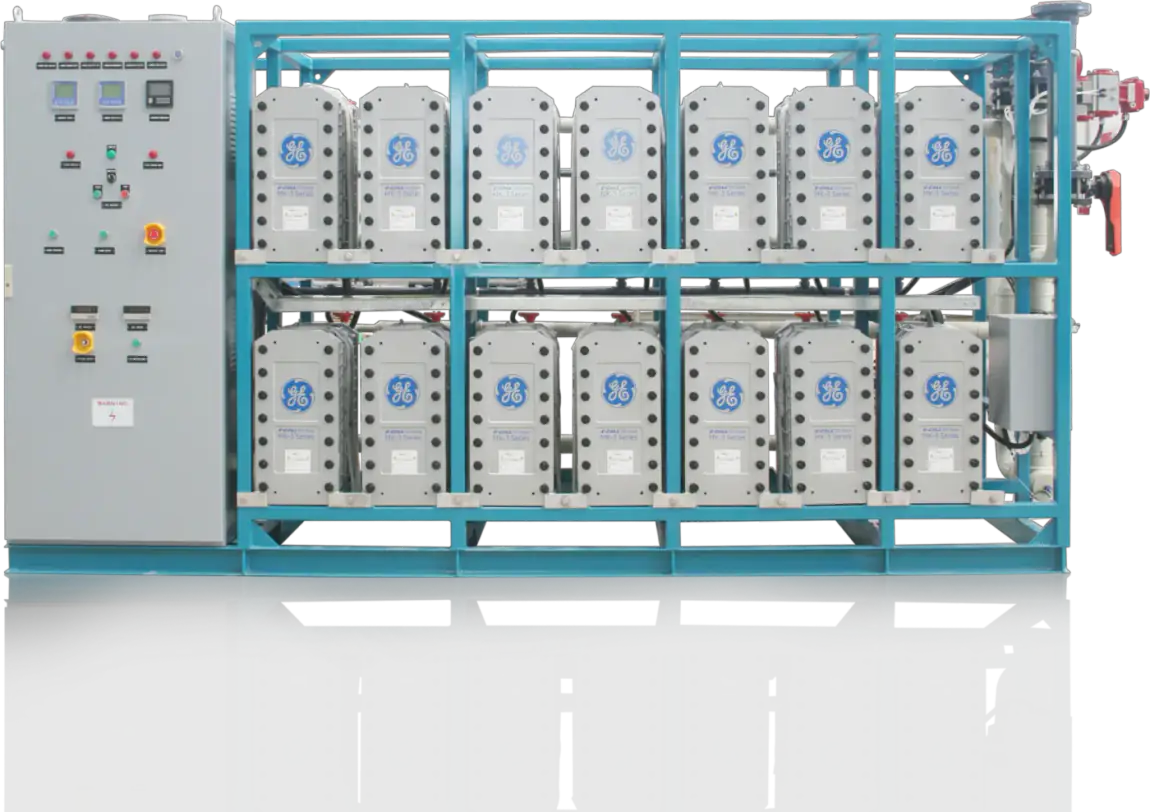
- Flow range to price
- 0.5–50 m³/h Flow range to price
- Budget tiers
- 3 tiers Budget tiers
- Equipment warranty
- 12–18 months Equipment warranty
- Export experience
- 100+ countries Export experience
01
What determines the price of a commercial water filter?
A commercial water filter is a treatment train, not a single box. The budget is built from the flow rate, the feed water analysis, the process steps needed to reach the target water quality, the grade of components, the control philosophy and the logistics scope. Two systems with the same nominal output can differ substantially when one treats clean municipal water and the other treats borehole water with iron, hardness and high TDS.
The largest cost drivers are usually pretreatment and the membrane array, followed by the pump, frame and tanks, controls and disinfection. Labour, freight, commissioning and spare parts complete the picture. A quotation that lists only the RO skid leaves the buyer to discover the rest of the train later, which is why we price the complete scope.
| Cost driver | Why it changes the budget | What to specify |
|---|---|---|
| Permeate flow | Sets pump, membrane, vessel and frame size; fixed costs do not scale linearly | Peak and daily demand in m³/h, with design temperature |
| Feed TDS | Higher pressure, more membranes and higher pump power | Lab analysis in mg/L or conductivity in µS/cm |
| Hardness and silica | Softener, antiscalant and concentrate management | Hardness as CaCO₃, silica, sulphate and target recovery |
| Iron, manganese and turbidity | Oxidation, multimedia filtration and cartridge protection | Fe and Mn in mg/L, NTU and SDI15 |
| Membrane brand and type | Element price, design flux, warranty terms and lead time | Preferred brand, model, quantity and design flux |
| Pump and wetted materials | Pump brand, head, efficiency and stainless versus cast iron | Pump brand, duty point, voltage and material |
| Frame, tanks and piping | Stainless grade, wall thickness, tank volume and skid size | 304 or 316, tank volume, indoor or outdoor installation |
| Control and instrumentation | Relay logic versus PLC, touch screen, flow and conductivity meters | Control level, I/O list, language and remote monitoring |
| Disinfection and storage | UV, ozone or chlorine dosing; tank size and transfer pumps | Target quality, water temperature and storage volume |
| Freight and installation | Packing, distance, container type, site access and unloading | Destination, Incoterm, site conditions and lifting plan |
| Commissioning and spares | Remote or on-site support, training, startup and wear parts | Scope, operator count, language and spare parts list |
Each line is a scope decision. Changing a line changes the budget; it is not a discount item.
02
Why can't you quote a price per m³/h?
A per-m³/h figure assumes every cubic metre is treated the same way. It is not. A small system carries a disproportionate share of fixed cost — controls, instruments, valves, testing and documentation — so the cost per m³/h falls as capacity rises. A large system may need a different membrane array, a larger electrical package and more pretreatment, so the curve is not a straight line.
Feed chemistry changes the train more than flow does. A 2 m³/h system on clean municipal water may need only carbon, RO and UV. A 2 m³/h system on a borehole with iron, hardness and high TDS may need oxidation, multimedia filtration, softening, antiscalant dosing, a two-stage array and a larger frame. The RO skid may be a minority of the total. Any unit rate would have to assume a water quality that the buyer has not yet measured.
That is why we quote a configuration, not a rate. The budget tier and the itemised scope travel together; the flow rate alone is not a design basis.
03
Which budget tier fits your project — Essential, Standard or Turnkey?
The three tiers are scopes, not price bands. Essential covers a proven configuration for clean municipal water and a buyer who handles freight, installation and local works. Standard adds engineering against the water analysis, the pretreatment and disinfection needed for the site, factory testing and commissioning support. Turnkey adds tanks, hydraulic works, installation, commissioning, operator training and a startup spare package.
A tier can be adjusted line by line. If you already have a plant room and a contractor, Essential or Standard may be enough. If the site is remote, the power supply is unstable, or no local operator has run an RO plant, the Turnkey scope reduces startup risk. The tier affects the budget mainly through what is included, not through a discount.
No tier changes the water quality target. A Turnkey project and an Essential project can use the same membrane and pump grade; the difference is who supplies the tanks, installation and commissioning. Choose the tier by site capability and operating model, not by budget size alone.
| Scope item | Essential | Standard | Turnkey |
|---|---|---|---|
| Design basis | Standard configuration for clean municipal water | Engineered from the water analysis | Engineered from analysis and site survey |
| Pretreatment | Cartridge filter only | Multimedia, carbon and softener or antiscalant as required | Full pretreatment with duty and standby |
| RO or UF skid | Standard skid | Configured array, instruments and CIP | Configured array with redundancy and CIP |
| Controls | Relay logic and basic protection | PLC with conductivity and flow trending | PLC with remote monitoring and data logging |
| Disinfection | Not included | UV or ozone as required | UV or ozone with duty and standby |
| Tanks and hydraulic works | Not included | Optional | Raw and treated water tanks, transfer pumps |
| Spare parts | Startup kit only | Recommended wear parts list | Extended recommended spares |
| Freight and insurance | Ex-works | Quoted to destination | Quoted to destination with customs support |
| Installation | Not included | Supervision or remote guidance | Full installation by the site team |
| Commissioning and training | Remote guidance | Remote or on-site commissioning | On-site commissioning and operator training |
| Warranty | 12–18 months | 12–18 months | 12–18 months |
Tiers are commercial scopes. Any line can be moved between tiers after the design review.
04
What should a quotation itemise?
A usable quotation starts with the design basis: source water, required permeate flow at a stated temperature, recovery, target conductivity or TDS, and the standard the water must meet. Every equipment line should then reference a model, a quantity and a material. A lump sum without a scope is not comparable with another lump sum.
The commercial part should separate equipment, optional items, spare parts, packing, freight, insurance, commissioning and training. It should also state the Incoterm, the lead time basis, the warranty period and the validity of the offer. If the quotation includes installation, list what the buyer supplies — power, water, drain, foundation, lifting and accommodation.
| Quotation line | What it should state | Why it matters |
|---|---|---|
| Design basis | Source, flow at temperature, recovery and target quality | Prevents comparing different duties |
| Process flow diagram | Each treatment step and the design flux | Shows what is really included |
| Equipment list | Model, quantity, material and brand for pumps, membranes, valves and instruments | Allows like-for-like comparison |
| Pretreatment | Vessels, media volume, valve type and backwash source | Often the largest hidden difference |
| Electrical and controls | Voltage, PLC or relay, instrumentation and panel standard | Site power and spare parts depend on it |
| Tanks and hydraulic works | Included or by others, material and volume | Avoids a gap between skid and plant room |
| Spare parts | Startup kit and recommended wear parts | First-year operation depends on it |
| Packing and freight | Export packing, Incoterm, insurance and destination | Delivered cost is not equipment cost |
| Commissioning and training | Remote or on-site, duration, language and scope | Startup risk and operator competence |
| Warranty and validity | Period, start date, exclusions and offer validity | Defines recourse after shipment |
05
What affects lead time?
Lead time is driven by engineering approvals, component availability and factory test capacity, not by the size of the skid alone. A standard configuration with a frozen drawing moves faster. Custom voltage, non-standard controls, a special frame colour or a buyer-supplied membrane brand adds engineering and procurement steps.
Membranes, pumps, instruments and UV reactors have their own lead times, and long-lead items should be identified before the order is placed. Factory testing occupies a test slot and cannot be compressed without skipping checks. After packing, the shipping mode, route, customs clearance and site readiness decide when the plant actually starts. The quotation states the lead time from drawing approval, not from the inquiry date. A realistic schedule also allows time for the buyer to review and approve drawings; late comments are a common cause of delay.
- Drawing approval and deposit release
- Long-lead pumps, membranes, instruments and UV reactors
- Custom voltage, control philosophy and panel certification
- Factory pressure test and trial run slot
- Export packing, freight booking and customs
- Site readiness: foundation, power, water and drain
06
How do you compare two quotations fairly?
Put both offers on the same design basis before comparing totals. Check that each states permeate flow at the same temperature, the same feed analysis, the same recovery and the same product quality. Then compare the process train step by step: pretreatment, membrane brand and quantity, pump brand and material, instrumentation, control level, disinfection and tanks.
Finally compare the commercial scope: spare parts, packing, Incoterm, insurance, commissioning, training, warranty and lead time. A lower equipment figure with Ex-Works delivery, no pretreatment and no commissioning is not a lower project cost. Ask each supplier to fill the same scope matrix; gaps become visible quickly.
- Same feed analysis and same design temperature
- Same recovery and same product quality
- Same membrane, pump and instrument brands
- Same spare parts, freight terms and commissioning scope
- Same warranty period and lead time basis
07
Can you reduce the budget without compromising water quality?
Yes, but only by removing scope that the site does not need, not by removing treatment that protects the membrane or the product. Right-sizing the permeate flow, staging the plant, using a standard control level, reusing existing tanks and consolidating shipments are safe levers. Cutting pretreatment on hard or iron-bearing water, undersizing the membrane array or skipping disinfection usually moves cost into maintenance and downtime.
A staged project can start with the treatment steps required for the current water source and leave space, valves and electrical capacity for a later stage. That approach needs a process flow diagram that anticipates the extension; otherwise the saving is lost when the plant is rebuilt.
| Cost lever | Safe adjustment | Risk if taken too far |
|---|---|---|
| Permeate flow | Size on measured peak and daily demand, not a round number | Short cycles, poor recovery and early replacement |
| Pretreatment | Match media and dosing to the analysis; standby only where needed | Membrane fouling and frequent cleaning |
| Membrane array | Use a standard element and a design flux suitable for the feed | Lower rejection and more concentrate |
| Controls | Choose the simplest level the operator can maintain | Poor troubleshooting and manual errors |
| Tanks | Reuse existing tanks if material and volume are adequate | Contamination and insufficient buffer |
| Freight | Consolidate shipments and choose a realistic Incoterm | Damage, delays and unclear responsibility |
| Spares | Stock the parts that actually fail, not a full warehouse | Long downtime waiting for parts |
08
What information do you need to send for an accurate quotation?
Send a water analysis first. At minimum: pH, conductivity or TDS, total hardness, alkalinity, chloride, sulphate, silica, iron, manganese, turbidity, free chlorine, COD or colour, and a bacteria result if the source is surface water or a shallow well. A recent analysis is more useful than a description of the source.
Then send the demand profile: required permeate flow, hours of operation, peak demand, storage capacity and the target water quality. Add the site conditions — power supply, voltage, available space, drain, climate, altitude and indoor or outdoor installation — and the destination and Incoterm. If a certification, nameplate language or special marking is required, state it before the drawing is issued.
- 01
Water analysis
A complete lab report, not only a TDS pen reading.
- 02
Demand profile
Peak flow, daily volume, operating hours and storage.
- 03
Product quality
Conductivity or TDS target, and the standard to be met.
- 04
Site data
Power, voltage, space, drain, climate and access.
- 05
Commercial scope
Destination, Incoterm, installation and certification needs.
- 06
Review
Process design, budget tier and itemised quotation.
No figure is published on this page. A budget tier is confirmed only against a specific water analysis and scope.
09
Do prices differ by country or region?
The equipment itself is quoted ex-works, FOB or CIF. What changes between markets is the landed cost: freight lane, port handling, import duty, voltage and frequency, packing requirements, documentation and installation scope. Two buyers ordering the same skid can therefore see different totals without any difference in the equipment price.
The table lists the factors that most often change a quotation. Send the destination port or city, the site voltage and frequency, and the applicable certification requirement with your inquiry, so the quotation reflects the real scope rather than a generic assumption.
| Region | Factors that change the quotation | Confirm at inquiry |
|---|---|---|
| Middle East (UAE, Saudi Arabia, Qatar, Oman) | 60 Hz power, high-TDS feed, high ambient temperature derating, CIF Jebel Ali or Dammam | Voltage, feed TDS, summer design temperature |
| Southeast Asia (Philippines, Vietnam, Thailand, Malaysia, Indonesia) | Mixed 50/60 Hz, sea freight and port handling, spare-parts lead time, humidity protection | Voltage and frequency, destination port, spare-parts list |
| Africa (Nigeria, Kenya, Tanzania, South Africa) | Long inland haulage, unstable grid or generator supply, iron-rich borehole water, clearing and duty | Power stability, water analysis, delivery city |
| Europe and UK | CE documentation, 230/400 V 50 Hz, local plumbing codes, higher freight and packing | CE scope, voltage, documentation language |
| Americas (US, Latin America) | 60 Hz, 208–480 V, project-specific certification requirements, long freight lanes | Voltage, certification scope, destination port |
| Australia and New Zealand | 230/400 V 50 Hz, biosecurity packing rules, freight and local installation | Voltage, packing requirement, site access |
Logistics and specification factors only. No price is published for any region.
FAQ
Frequently asked questions
Questions buyers actually ask during sizing and quotation. Answers match the specifications above.
01 How much does a commercial water filter cost?
02 Why do quotations for the same flow differ so much?
03 Can you provide a budget before I have a water analysis?
04 Does a lower equipment price mean a lower project cost?
05 Is installation included in the price?
06 What warranty is included?
07 How long is a quotation valid?
08 What is normally excluded from a quotation?
09 Can you quote a containerized or turnkey option?
Next step
Send your water analysis, get a factory quotation
Tell us the source water, TDS, hardness, iron and daily demand. Factory engineers reply with a flow rate, process train and budget range within one working day.